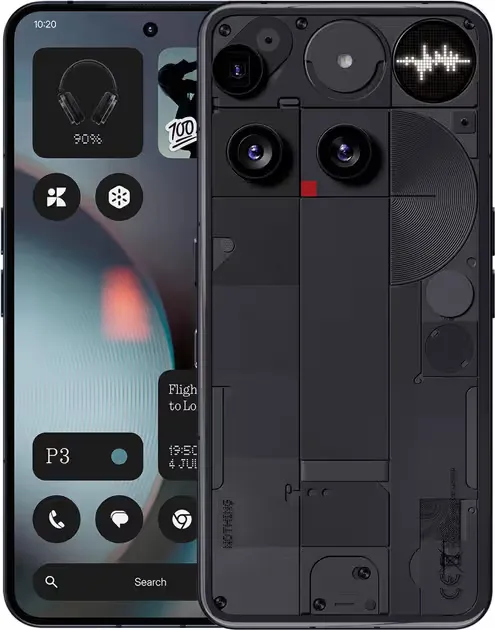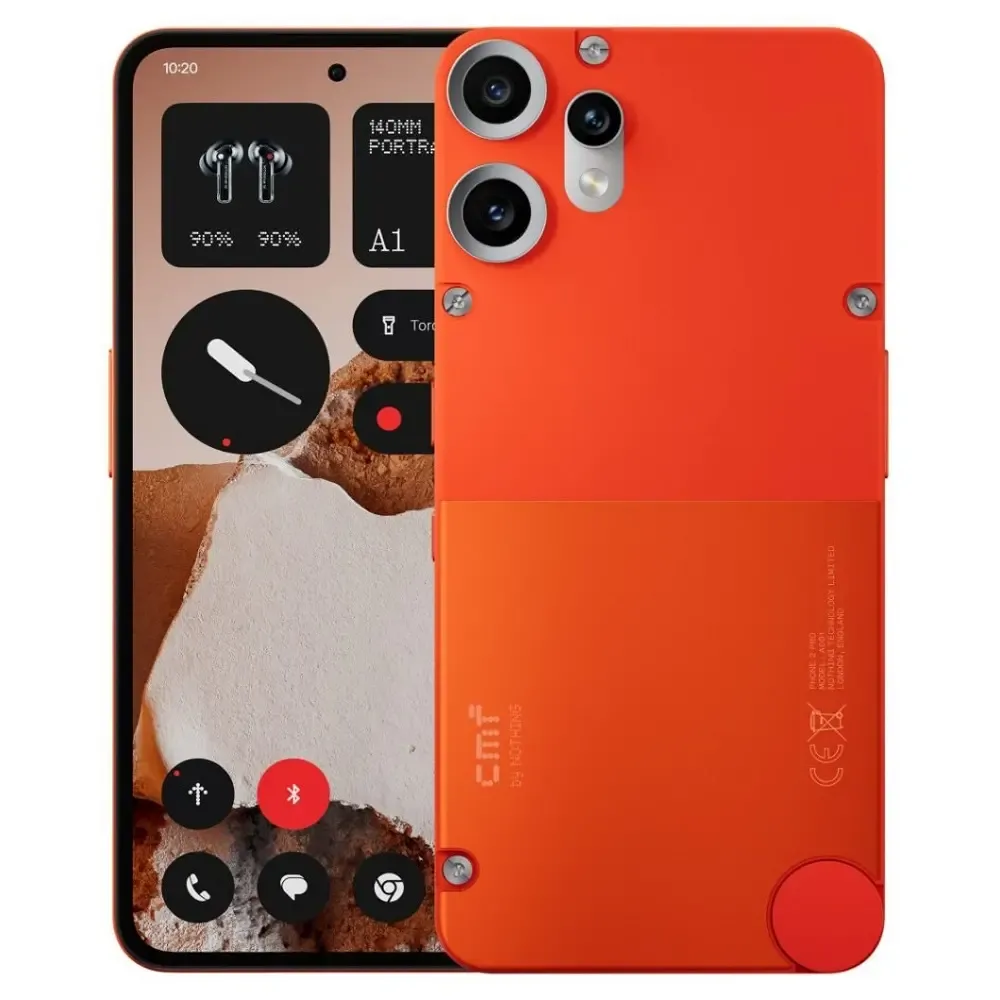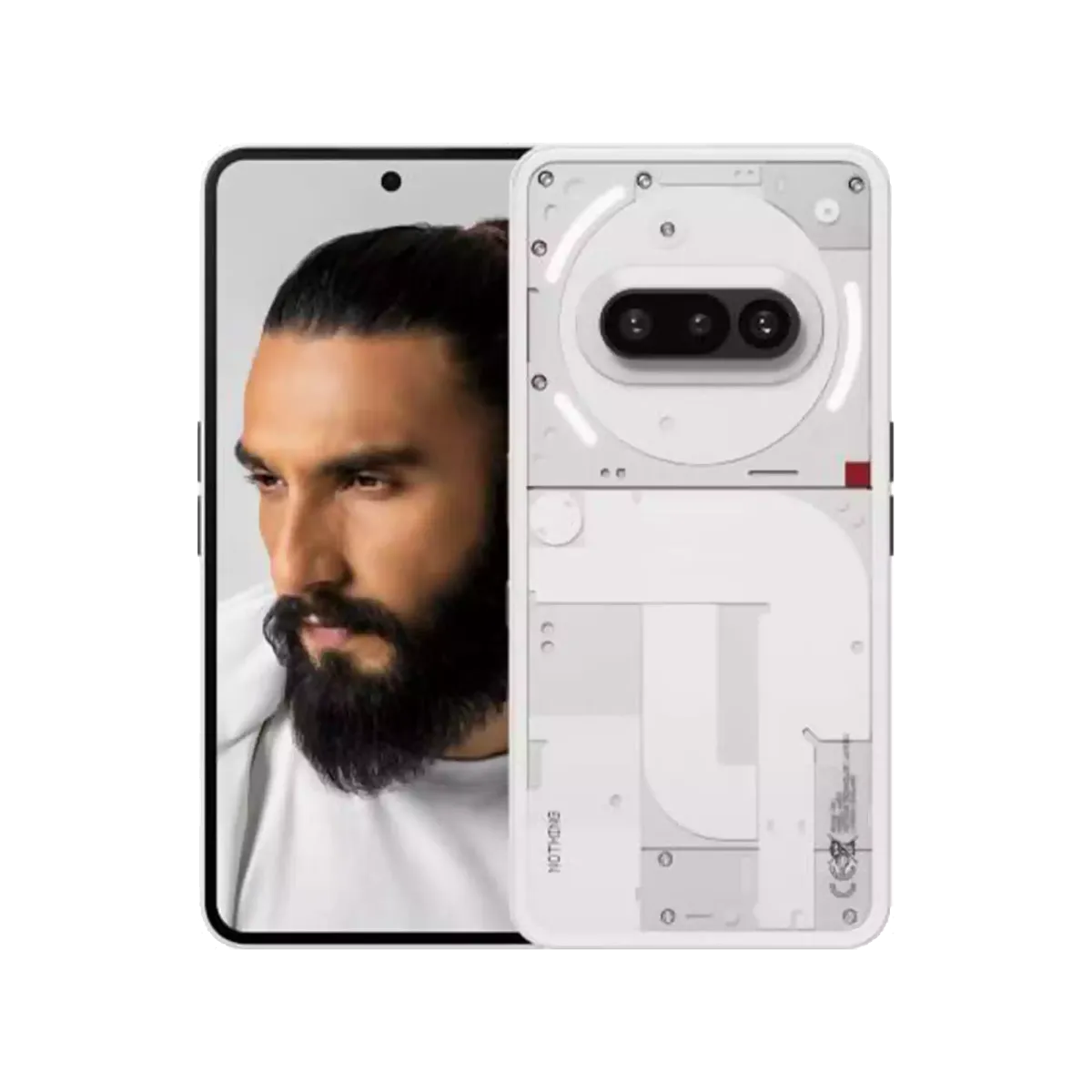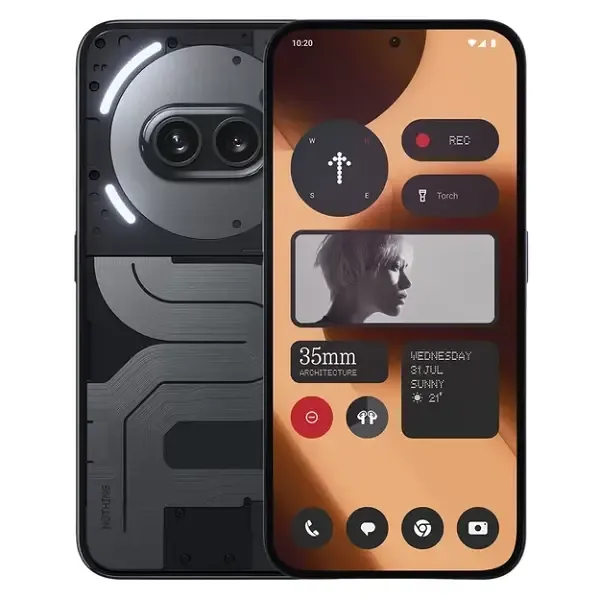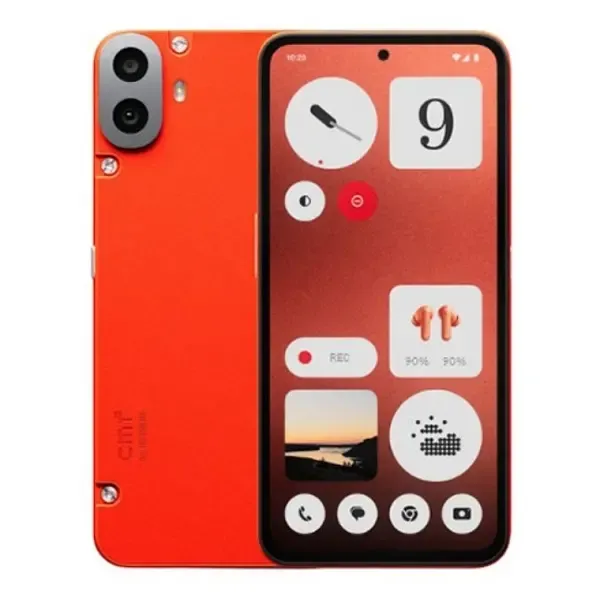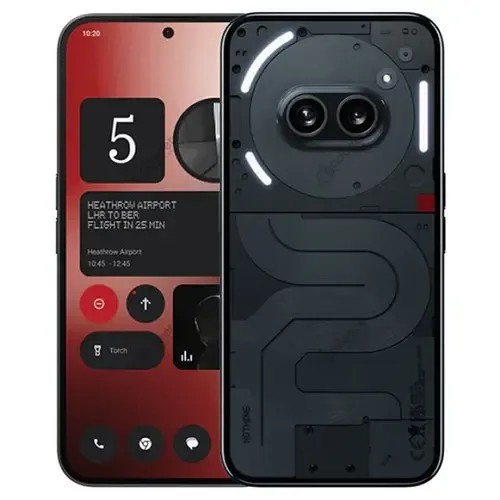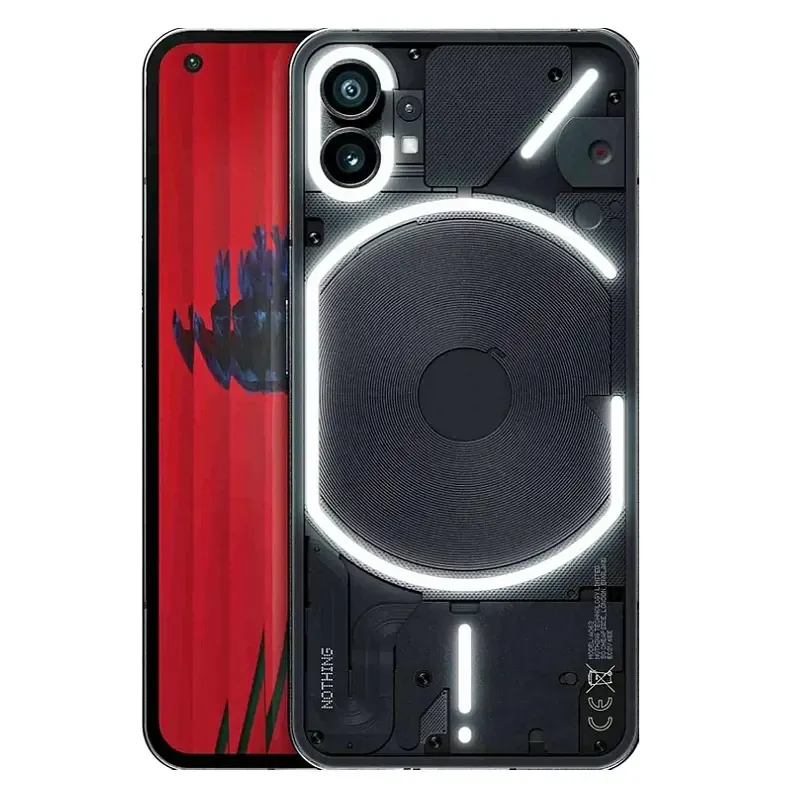
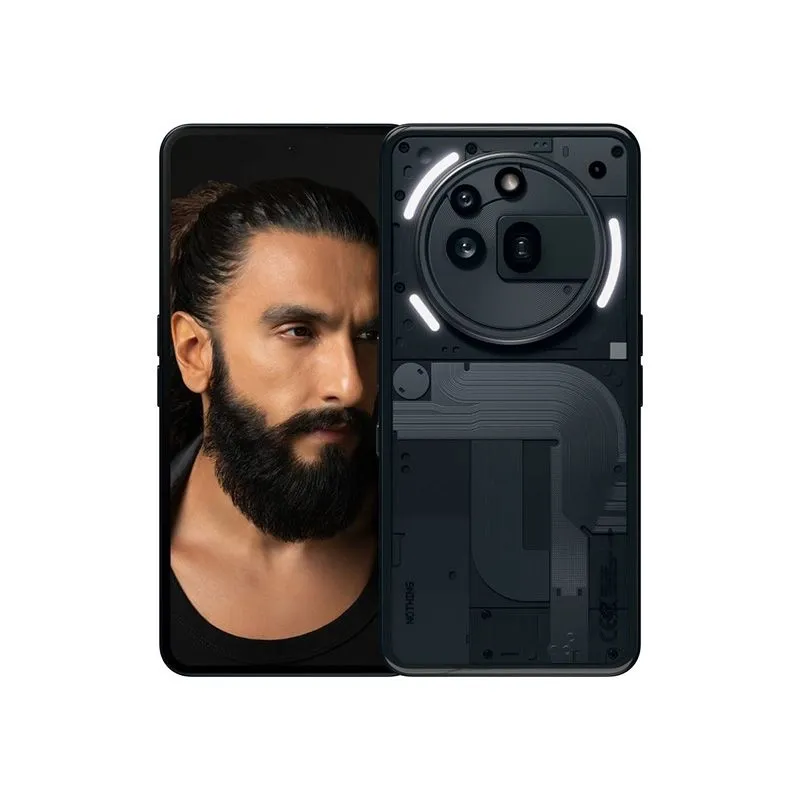
Available Variants
Full Specifications
Upgrade Worth It?Network
| Technology | GSM / HSPA / LTE / 5G |
| 2G bands | GSM 850 / 900 / 1800 / 1900 |
| 3G bands | HSDPA 800 / 850 / 900 / 1700(AWS) / 1900 / 2100 |
| Speed | HSPA, LTE, 5G |
| 4G bands | 1, 2, 3, 4, 5, 7, 8, 12, 17, 18, 19, 20, 26, 28, 38, 40, 41, 42, 48, 66 |
| 5G bands | 1, 2, 3, 5, 7, 8, 12, 20, 28, 38, 40, 41, 48, 66, 77, 78 SA/NSA |
Launch
| Announced | 2025, March 04 |
| Status | Available. Released 2025, March 25 |
Body
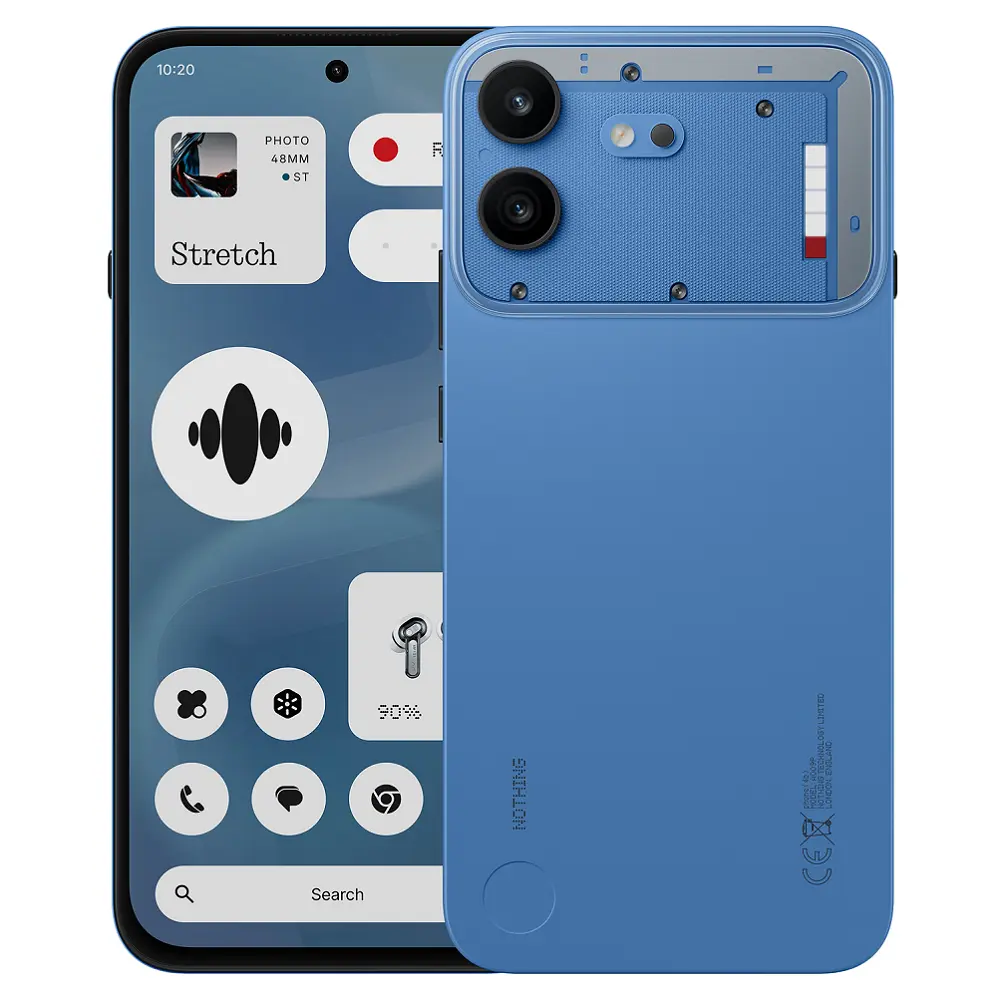
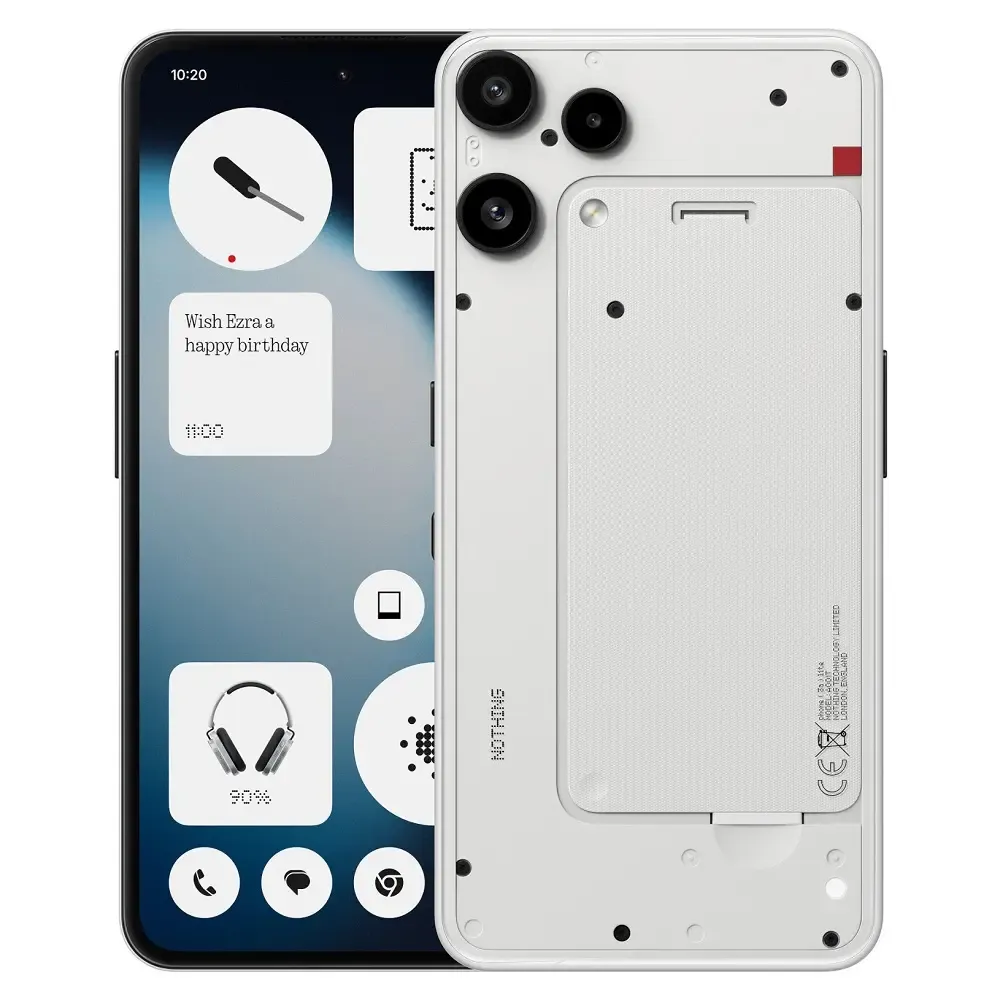
| Features | 3 LED light strips on the back (notifications, camera fill light, 26 addressable zones) |
| Protection | IP64 dust tight and water resistant (water splashes) |
| SIM | · Nano-SIM + Nano-SIM + eSIM (max 2 at a time) · Nano-SIM + Nano-SIM - India only |
| Build | Glass front (Panda Glass), plastic frame, glass back |
| Weight | 211 g (7.44 oz) |
| Dimensions | 163.5 x 77.5 x 8.4 mm (6.44 x 3.05 x 0.33 in) |
Display
| Size | 6.77 inches, 111.5 cm2 (~88.0% screen-to-body ratio) |
| Resolution | 1080 x 2392 pixels (~387 ppi density) |
| Protection | Panda Glass, Mohs level 5 |
| Features | Ultra HDR image support |
| Type | AMOLED, 1B colors, 120Hz, 2160Hz PWM, HDR10+, 800 nits (typ), 1300 nits (HBM), 3000 nits (peak) |
Hardware & Software
| OS | Android 15, upgradable to Android 16, Nothing OS 4.0, up to 3 major Android upgrades |
| Chipset | Qualcomm SM7635 Snapdragon 7s Gen 3 (4 nm) |
| CPU | Octa-core (1x2.5 GHz Cortex-A720 & 3x2.4 GHz Cortex-A720 & 4x1.8 GHz Cortex-A520) |
| GPU | Adreno 810 |
Memory & Storage
| Card slot | No |
| Internal | 128GB 8GB RAM, 256GB 8GB RAM, 256GB 12GB RAM |
Main Camera
| Triple | 50 MP, f/1.9, 24mm (wide), 1/1.56", 1.0µm, dual pixel PDAF, OIS 50 MP, f/2.6, 70mm (periscope telephoto) (15cm - ∞), 1/1.95", 0.8µm, PDAF, OIS, 3x optical zoom 8 MP, f/2.2, 15mm, 120˚ (ultrawide), 1/4.0", 1.12µm |
| Video | 4K@30fps, 1080p@30/60/120fps, gyro-EIS, OIS |
| Features | LED flash, panorama, HDR |
Selfie Camera
| Single | 50 MP, f/2.2, 24mm (wide), 1/2.76" |
| Video | 4K@30fps, 1080p@30fps |
Sound
| Loudspeaker | Yes, with stereo speakers |
| 3.5mm jack | No |
Connectivity
| WLAN | Wi-Fi 802.11 a/b/g/n/ac/6, dual-band, Wi-Fi Direct |
| USB | USB Type-C 2.0, OTG |
| Radio | No |
| NFC | Yes |
| Positioning | GPS, GALILEO, GLONASS, BDS, QZSS |
| Bluetooth | 5.4, A2DP, LE |
Features
| Sensors | Fingerprint (under display, optical), accelerometer, gyro, proximity, compass |
Battery
| Charging | 50W wired, 50% in 19 min, 100% in 56 min |
| Type | 5000 mAh |
Tests
| Performance | AnTuTu: 820097 (v10) GeekBench: 3327 (v6) 3DMark: 1061 (Wild Life Extreme) |
| EU LABEL | Energy: Class C Battery: 43:17h endurance, 1400 cycles Free fall: Class C (90 falls) Repairability: Class C |
| Battery | Active use score 13:37h |
| Loudspeaker | -23.3 LUFS (Very good) |
| Display | 1307 nits max brightness (measured) |
Community Discussions
(0)No Discussions Yet
Be the first to ask a question, share a review, or give advice about the Nothing Phone (3a) Pro.
Start a DiscussionFrequently Asked Questions
Description
Overview & Display
The Nothing Phone (3a) Pro, launched in 2025 by the brand Nothing, introduces a compelling hardware profile for users seeking a distinct daily driver. The front of the device is dominated by a 6.77-inch AMOLED display that supports up to one billion colors, delivering rich tones and deep contrast for video streaming or photo viewing. Navigating through apps and scrolling through feeds feels remarkably fluid thanks to its 120Hz refresh rate, while the 2160Hz PWM dimming helps reduce eye strain during prolonged night use. Under direct sunlight, visibility remains excellent as the panel hits a peak brightness of 3000 nits. The screen is protected by Mohs level 5 Panda Glass, and the overall construction utilizes a glass front, a plastic frame, and a glass back. For peace of mind against the elements, the chassis carries an IP64 dust tight and water resistance rating, shielding it from accidental water splashes. The signature design hallmark returns with three distinctive LED light strips integrated into the back, featuring twenty-six addressable zones to visually manage incoming notifications or serve as a soft camera fill light. Driving the user experience is the Qualcomm Snapdragon 7s Gen 3 processor built on a power-efficient 4 nm architecture, which comfortably handles multitasking and ensures a responsive feel during everyday operations.
Camera & Battery
Imaging on the rear is driven by a flexible triple camera array designed to capture a wide array of scenarios. The primary 50 MP wide lens features a bright aperture alongside dual pixel phase detection autofocus and optical image stabilization, which counteracts hand shakiness to deliver crisp images. A dedicated 50 MP periscope telephoto lens brings distant objects closer with a 3x optical zoom and its own optical image stabilization, allowing sharp close-ups down to fifteen centimeters away. Expanding the frame is an 8 MP ultrawide camera with a 120-degree field of view, ideal for landscape shots or cramped group photos. The main camera system records video up to 4K resolution at 30fps, or 1080p video at up to 120fps with gyro electronic image stabilization assisting the physical stabilizer. On the front, a 50 MP selfie camera captures detailed self-portraits and can also shoot video at 4K resolution at 30fps. Keeping everything powered is a substantial 5000 mAh battery that registers an active use endurance score of over thirteen hours. When it is time to plug in, the device supports 50W wired charging, which can replenish half the battery capacity in nineteen minutes or achieve a full charge in fifty-six minutes.
Who Should Buy This
This smartphone is well-suited for social media enthusiasts, casual gamers, and everyday multitaskers who prioritize a smooth visual display and a unique design aesthetic. The high-refresh-rate AMOLED display combined with stereo speakers makes it an enjoyable platform for consuming streaming media and browsing image-heavy platforms. The inclusion of an optical periscope zoom lens makes it appealing to mobile photography enthusiasts who want to experiment with different focal lengths without losing image clarity. However, potential owners must weigh a few functional trade-offs before committing. The phone lacks a traditional 3.5mm headphone jack, meaning users will need to rely on wireless Bluetooth 5.4 connectivity or adapters for audio. Storage expansion is not possible due to the absence of a memory card slot, making it necessary to select the initial internal storage capacity carefully based on your long-term needs. Furthermore, while the primary camera setup is highly capable, the ultrawide camera utilizes a smaller sensor that might struggle to capture optimal details in challenging low-light environments. Despite these considerations, it serves as a highly reliable companion for anyone looking to stand out with a distinct notification light system while maintaining strong core performance.
Pros
Distinctive Glyph interface with three LED strips for unique visual notifications.
Highly fluid 120Hz AMOLED display with excellent sunlight visibility up to 3000 nits.
Versatile triple camera setup featuring a 3x optical zoom periscope lens.
Dual optical image stabilization on both the main and telephoto cameras.
Fast 50W charging that fills half the battery capacity in under twenty minutes.
Cons
No 3.5mm headphone jack for wired audio accessories.
Missing microSD card slot prevents expanding internal storage.
Low-light performance on the secondary cameras can show limitations.
Plastic frame construction instead of a full metal chassis.
Verdict
The Nothing Phone (3a) Pro delivers a balanced mix of eye-catching design features and robust hardware capable of handling demanding daily routines. It stands out as an excellent option for users who want strong display quality, fast charging, and unique visual notifications. This device is ultimately ideal for mainstream users and mobile photographers who appreciate distinct styling without compromising on essential performance.
Write a Review
Reviews (3)
Upgrade Worth It?
Using an older phone?
Compare your current device with Nothing Phone (3a) Pro to analyze performance gains and price difference.
Camera Samples
Performance & Features
Estimated average on high settings
Screen-on time (mixed usage)
Based on AI analysis
* These values are calculated automatically by our system and may not be 100% accurate.
Antutu Benchmark
v10* Scores are based on lab tests and may vary by device condition and version.