Available Variants
Full Specifications
Upgrade Worth It?Network
| Technology | GSM / HSPA / LTE / 5G |
| 2G bands | GSM 850 / 900 / 1800 / 1900 |
| 3G bands | HSDPA 800 / 850 / 900 / 1700(AWS) / 1900 / 2100 |
| Speed | HSPA, LTE, 5G |
| 4G bands | 1, 2, 3, 4, 5, 7, 8, 12, 17, 18, 19, 20, 26, 28, 38, 40, 41, 42, 48, 66 |
| 5G bands | 1, 2, 3, 5, 7, 8, 12, 20, 28, 38, 40, 41, 48, 66, 77, 78 SA/NSA |
Launch
| Announced | 2025, March 04 |
| Status | Available. Released 2025, March 11 |
Body
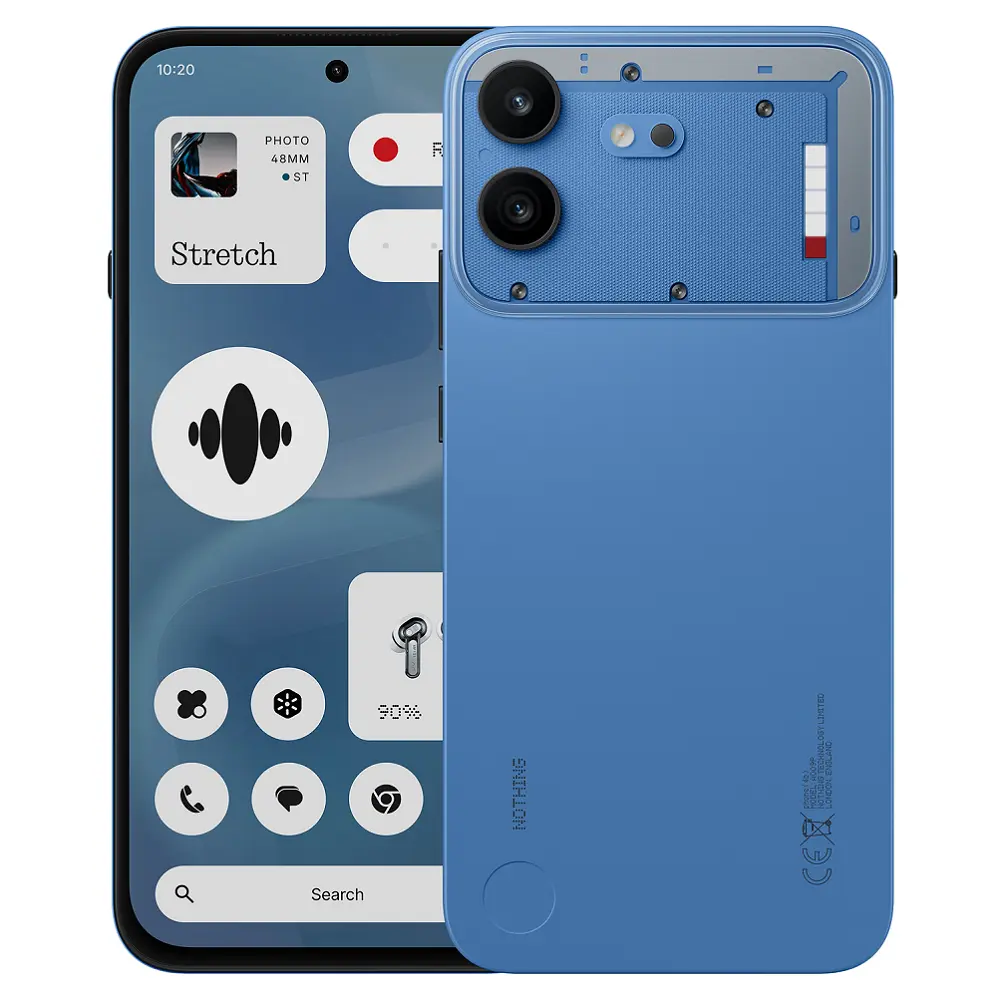
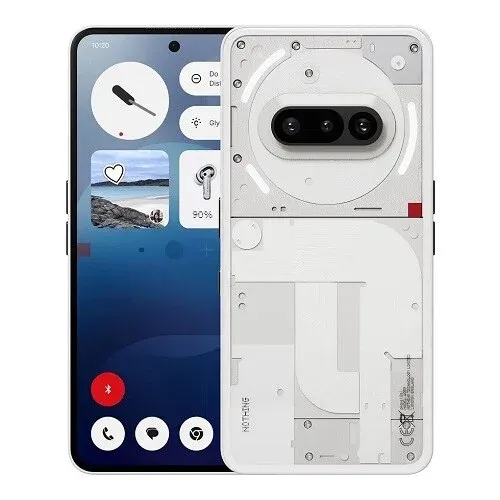
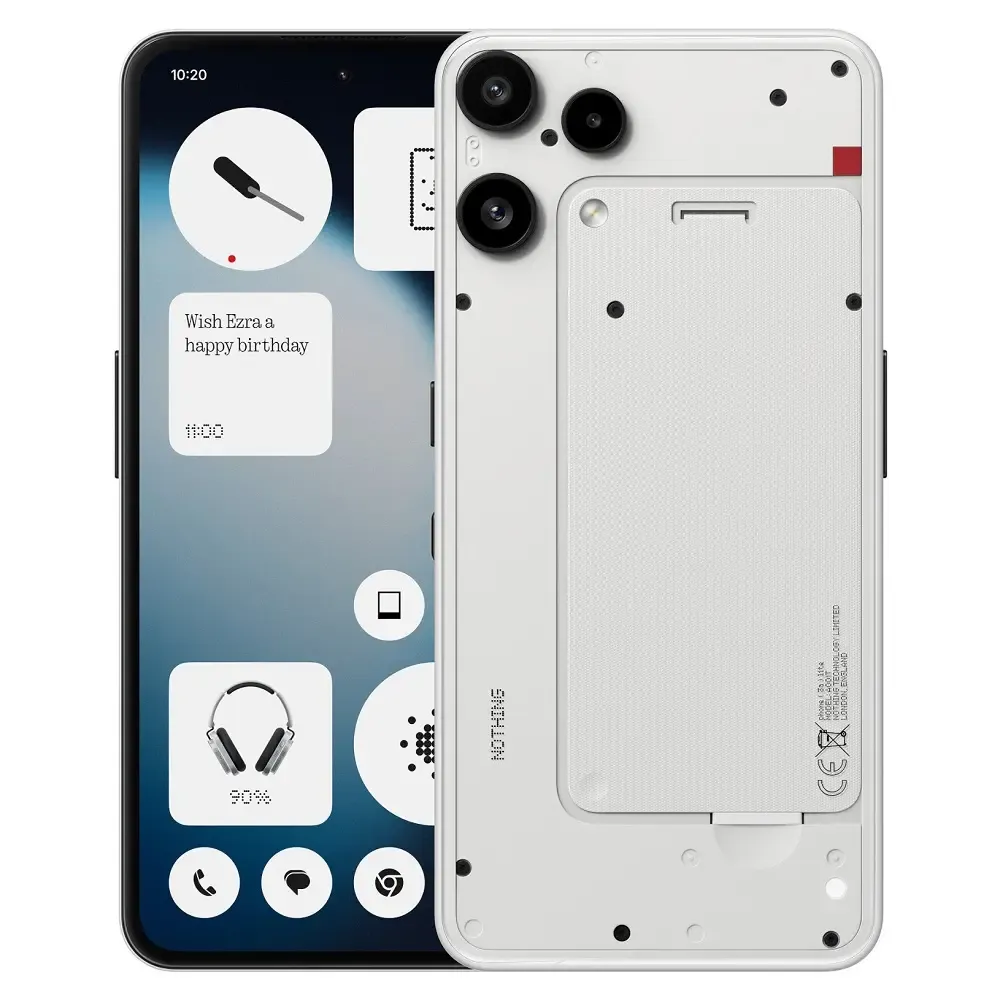
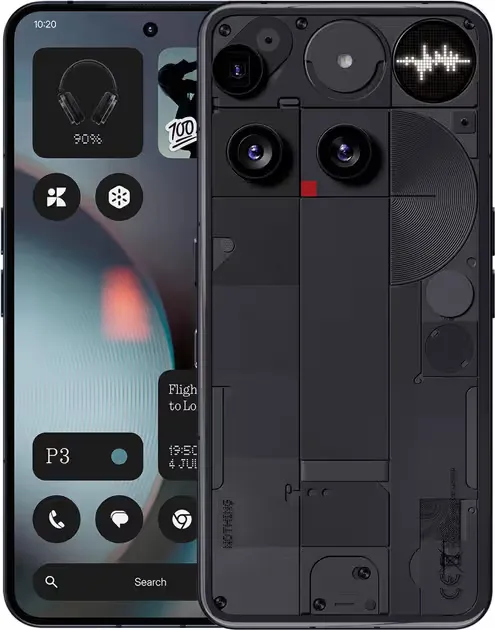
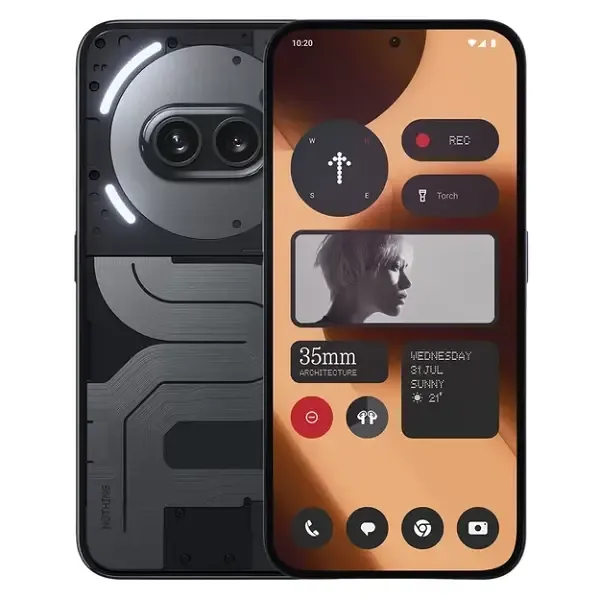
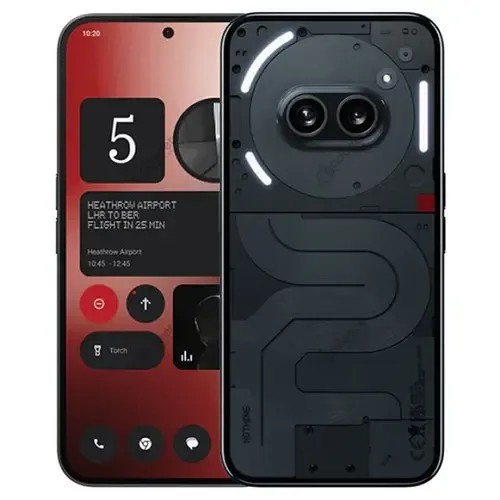
| LED Features | 3 LED light strips on the back (notifications, camera fill light, 26 addressable zones) |
| Protection | IP64 dust tight and water resistant (water splashes) |
| SIM | Nano-SIM + Nano-SIM |
| Build | Glass front (Panda Glass), plastic frame, glass back |
| Weight | 201 g (7.09 oz) |
| Dimensions | 163.5 x 77.5 x 8.4 mm (6.44 x 3.05 x 0.33 in) |
Display
| Image Support | Ultra HDR image support |
| Size | 6.77 inches, 111.5 cm2 (~88.0% screen-to-body ratio) |
| Resolution | 1080 x 2392 pixels (~387 ppi density) |
| Protection | Panda Glass, Mohs level 5 |
| Type | AMOLED, 1B colors, 120Hz, 2160Hz PWM, HDR10+, 800 nits (typ), 1300 nits (HBM), 3000 nits (peak) |
Hardware & Software
| OS | Android 15, upgradable to Android 16, Nothing OS 4.0, up to 3 major Android upgrades |
| Chipset | Qualcomm SM7635 Snapdragon 7s Gen 3 (4 nm) |
| CPU | Octa-core (1x2.5 GHz Cortex-A720 & 3x2.4 GHz Cortex-A720 & 4x1.8 GHz Cortex-A520) |
| GPU | Adreno 810 |
Memory & Storage
| Card slot | No |
| Internal | 128GB 8GB RAM, 256GB 8GB RAM, 256GB 12GB RAM |
Main Camera
| Triple | 50 MP, f/1.9, 24mm (wide), 1/1.57", 1.0µm, dual pixel PDAF, OIS 50 MP, f/2.0, 50mm (telephoto), 1/2.74", 0.64µm, PDAF (25cm - ∞), 2x optical zoom 8 MP, f/2.2, 15mm, 120˚ (ultrawide), 1/4.0", 1.12µm |
| Video | 4K@30fps, 1080p@30/60/120fps, gyro-EIS, OIS |
| Features | LED flash, panorama, HDR |
Selfie Camera
| Single | 32 MP, f/2.2, 22mm (wide), 1/3.44" |
| Video | 1080p@30fps |
Sound
| Loudspeaker | Yes, with stereo speakers |
| 3.5mm jack | No |
Connectivity
| WLAN | Wi-Fi 802.11 a/b/g/n/ac/6, dual-band, Wi-Fi Direct |
| USB | USB Type-C 2.0, OTG |
| Radio | No |
| NFC | Yes |
| Positioning | GPS, GALILEO, GLONASS, BDS, QZSS |
| Bluetooth | 5.4, A2DP, LE |
Features
| Sensors | Fingerprint (under display, optical), accelerometer, gyro, proximity, compass |
Battery
| Charging | 50W wired, 50% in 19 min, 100% in 56 min |
| Type | 5000 mAh |
Tests
| Performance | AnTuTu: 828429 (v10) GeekBench: 3278 (v6) 3DMark: 1064 (Wild Life Extreme) |
| EU LABEL | Energy: Class C Battery: 43:56h endurance, 1400 cycles Free fall: Class C (90 falls) Repairability: Class C |
| Battery | Active use score 13:38h |
| Loudspeaker | -24.1 LUFS (Very good) |
| Display | 1273 nits max brightness (measured) |
Community Discussions
(0)No Discussions Yet
Be the first to ask a question, share a review, or give advice about the Nothing Phone (3a).
Start a DiscussionFrequently Asked Questions
Description
Overview & Display
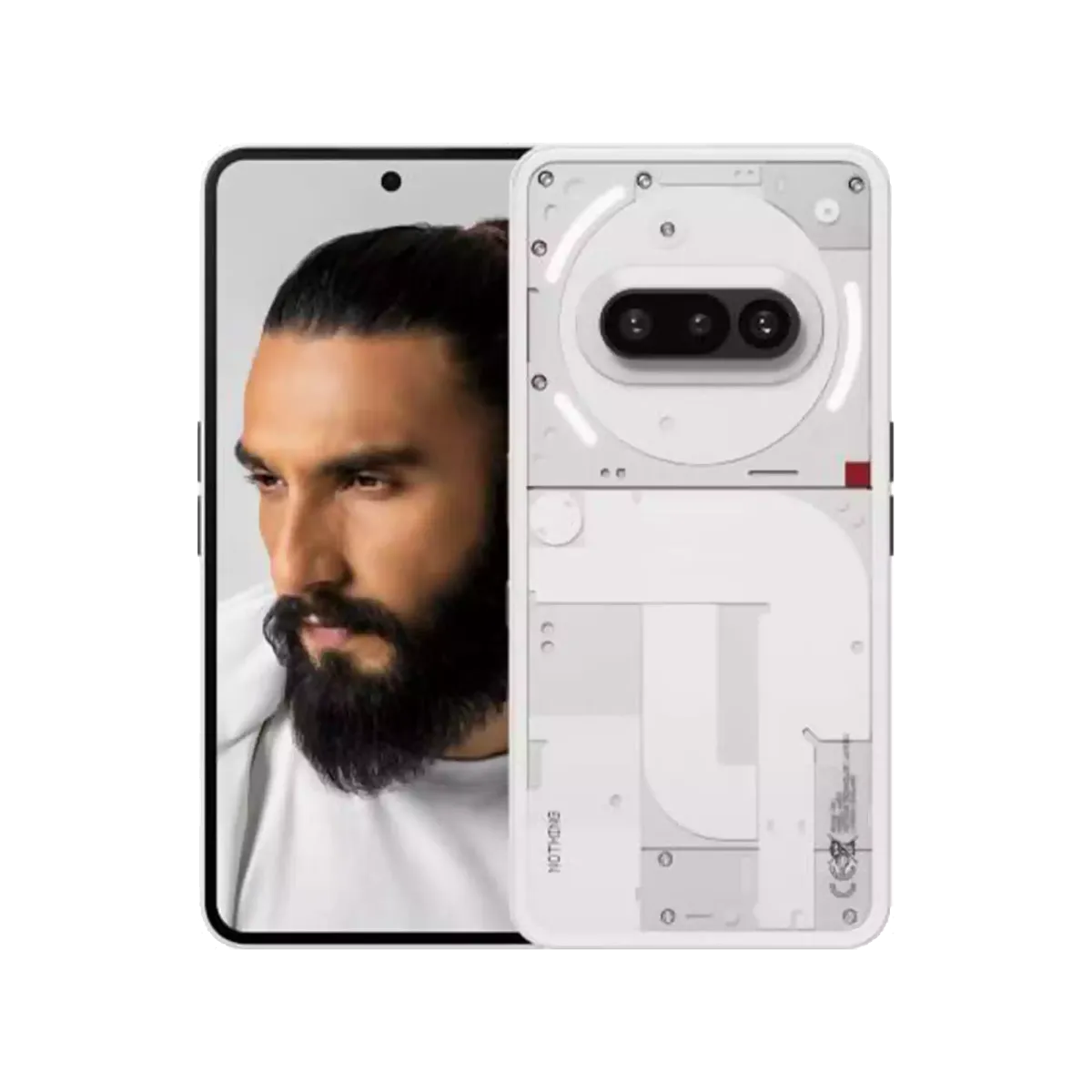
The Nothing Phone (3a), launched in 2025 by the brand Nothing, introduces a compelling daily experience with its distinct design and balanced hardware. The device features a vibrant 6.77-inch AMOLED display supporting up to one billion colors, which ensures rich visual depth and high contrast. Navigating interfaces and scrolling through application feeds is highly fluid thanks to a 120Hz refresh rate, while the 2160Hz PWM dimming works to reduce eye strain during prolonged use in low-light environments. When outdoors, the screen maintains excellent visibility under direct sunlight by reaching a peak brightness of 3000 nits. The front panel is constructed with protective Panda Glass carrying a Mohs level 5 hardness rating. Structurally, the device balances durability and style with a glass front, a plastic frame, and a glass back, all backed by an IP64 dust tight and water resistance rating to withstand accidental splashes. On the back, three signature LED light strips feature twenty-six addressable zones, acting as visual notification indicators and a functional camera fill light. Driving everyday system performance is the Qualcomm Snapdragon 7s Gen 3 processor built on a 4 nm architecture, offering a responsive user experience for regular daily tasks.
Camera & Battery
The phone is equipped with a triple rear camera system configured to handle diverse shooting environments. The main 50 MP wide sensor features a bright f/1.9 aperture, dual pixel phase detection autofocus, and optical image stabilization to keep images sharp by countering natural hand movements. It is accompanied by a 50 MP telephoto lens with a 2x optical zoom for detailed close-ups and an 8 MP ultrawide lens providing a wide 120-degree field of view for landscapes or group portraits. For video creation, the rear camera system shoots high-definition video at up to 4K resolution at 30fps, or 1080p video at up to 120fps, supported by both physical optical stabilization and gyro electronic image stabilization. The front-facing selfie camera uses a 32 MP wide lens to capture clean self-portraits and supports video recording up to 1080p at 30fps. Supplying the hardware is a 5000 mAh battery that registers an active use score of over thirteen and a half hours. The device supports 50W wired charging via USB Type-C, capable of pushing the battery to 50% capacity in nineteen minutes and completing a full 100% charge cycle in fifty-six minutes.
Who Should Buy This
This smartphone is an ideal option for students, young professionals, and social media enthusiasts who want a unique visual aesthetic combined with a clean everyday software experience. The combination of a large, fluid AMOLED display and stereo speakers makes it highly effective for streaming media, browsing image-heavy platforms, and managing standard productivity applications. The inclusion of three distinct LED light zones on the back provides real functional utility for individuals who prefer managing their notifications silently and visually. However, users should be mindful of specific practical design limitations before choosing this model. The device lacks a traditional 3.5mm headphone jack, requiring a dependency on wireless Bluetooth 5.4 accessories or Type-C adapters for audio. There is also no expandable storage card slot available, meaning you must choose your initial internal storage capacity carefully based on your long-term usage patterns. Additionally, while the main and telephoto lenses offer strong shooting performance, the smaller sensor size on the secondary ultrawide camera means it may show limitations in challenging low-light environments.
Pros
Eye-catching design featuring a back panel with three LED notification strips.
Highly fluid 120Hz AMOLED screen with excellent 3000 nits peak outdoor brightness.
Solid main imaging capabilities with dual pixel autofocus and optical stabilization.
Fast 50W wired charging that fills half the battery in under twenty minutes.
Built-in stereo speakers that offer very good audio output levels.
Cons
Missing 3.5mm audio jack limits direct connection to wired headphones.
No microSD card slot prevents expanding the built-in storage later.
Low-light performance on the secondary ultrawide lens shows noticeable drops in detail.
Mid-range processor framework is not optimized for heavy mobile gaming workloads.
Verdict
The Nothing Phone (3a) brings together a highly distinct hardware aesthetic with a smooth, bright display and rapid charging capabilities. It serves as a well-rounded daily driver for mainstream users who prioritize visual design, steady software presentation, and versatile core performance. This device is ultimately a practical choice for anyone looking to stand out stylistically while maintaining reliable everyday functionality.
Write a Review
Reviews (3)
Upgrade Worth It?
Using an older phone?
Compare your current device with Nothing Phone (3a) to analyze performance gains and price difference.
Camera Samples
Performance & Features
Estimated average on high settings
Screen-on time (mixed usage)
Based on AI analysis
* These values are calculated automatically by our system and may not be 100% accurate.
Antutu Benchmark
v10* Scores are based on lab tests and may vary by device condition and version.