Available Variants
Full Specifications
Upgrade Worth It?Network
| Technology | GSM / HSPA / LTE / 5G |
| 2G bands | GSM 850 / 900 / 1800 / 1900 |
| 3G bands | HSDPA 800 / 850 / 900 / 1700(AWS) / 1900 / 2100 |
| Speed | HSPA, LTE, 5G |
| 4G bands | 1, 2, 3, 4, 5, 7, 8, 12, 13, 14, 17, 18, 19, 20, 25, 26, 28, 29, 30, 38, 40, 41, 46, 48, 66, 71 |
| 5G bands | 1, 2, 3, 5, 7, 8, 12, 20, 25, 26, 28, 29, 30, 38, 40, 41, 48, 66, 70, 71, 77, 78, 258, 260, 261 SA/NSA/Sub6/mmWave |
Launch
| Announced | 2023, October 04 |
| Status | Available. Released 2023, October 12 |
Body
| Protection | IP68 dust tight and water resistant (immersible up to 1.5m for 30 min) |
| SIM | Nano-SIM + eSIM |
| Build | Glass front (Gorilla Glass Victus), glass back (Gorilla Glass Victus), aluminum frame |
| Weight | 187 g (6.60 oz) |
| Dimensions | 150.5 x 70.8 x 8.9 mm (5.93 x 2.79 x 0.35 in) |
Display
| Size | 6.2 inches, 91.1 cm2 (~85.5% screen-to-body ratio) |
| Resolution | 1080 x 2400 pixels, 20:9 ratio (~428 ppi density) |
| Protection | Corning Gorilla Glass Victus |
| Type | OLED, 120Hz, HDR10+, 1400 nits (HBM), 2000 nits (peak) |
Hardware & Software
| OS | Android 14, upgradable to Android 16, up to 7 major Android upgrades |
| Chipset | Google Tensor G3 (4 nm) |
| CPU | Nona-core (1x3.0 GHz Cortex-X3 & 4x2.45 GHz Cortex-A715 & 4x2.15 GHz Cortex-A510) |
| GPU | Immortalis-G715s MC10 |
Memory & Storage
| Card slot | No |
| Storage Type | UFS 3.1 |
| Internal | 128GB 8GB RAM, 256GB 8GB RAM |
Main Camera
| Video | 4K@24/30/60fps, 1080p@30/60/120/240fps; gyro-EIS, OIS, 10-bit HDR |
| Features | Laser AF, Dual-LED flash, Pixel Shift, Ultra HDR, panorama, Best Take |
| Dual | 50 MP (12 MP eff.), f/1.7, 25mm (wide), 1/1.31", 1.2µm, dual pixel PDAF, OIS 12 MP, f/2.2, 126˚ (ultrawide), 1/2.9", 1.25µm, AF |
Selfie Camera
| Single | 10.5 MP, f/2.2, 20mm (ultrawide), 1/3.1", 1.22µm |
| Video | 4K@24/30/60fps, 1080p@30/60fps |
| Features | HDR, panorama |
Sound
| Loudspeaker | Yes, with stereo speakers |
| 3.5mm jack | No |
Connectivity
| WLAN | Wi-Fi 802.11 a/b/g/n/ac/6e/7, tri-band, Wi-Fi Direct |
| USB | USB Type-C 3.2 |
| Radio | No |
| NFC | Yes |
| Positioning | GPS (L1+L5), GLONASS (G1), GALILEO (E1+E5a), QZSS (L1+L5) |
| Bluetooth | 5.3, A2DP, LE, aptX HD |
Features
| Sensors | Fingerprint (under display, optical), accelerometer, gyro, proximity, compass, barometer |
Battery
| Charging | 27W wired, PD3.0, PPS, 50% in 30 min 18W wireless Reverse wireless Bypass charging |
| Type | Li-Ion 4575 mAh |
Tests
| Performance | AnTuTu: 926801 (v9), 1158631 (v10) GeekBench: 3526 (v5), 4404 (v6) GFXBench: 73fps (ES 3.1 onscreen) |
| Battery | Active use score 11:17h |
| Battery (old) | Endurance rating 83h |
| Loudspeaker | -26.0 LUFS (Very good) |
| Camera | Photo / Video |
| Display | 1446 nits max brightness (measured) |
Community Discussions
(0)No Discussions Yet
Be the first to ask a question, share a review, or give advice about the Google Pixel 8.
Start a DiscussionFrequently Asked Questions
Description
Overview & Display
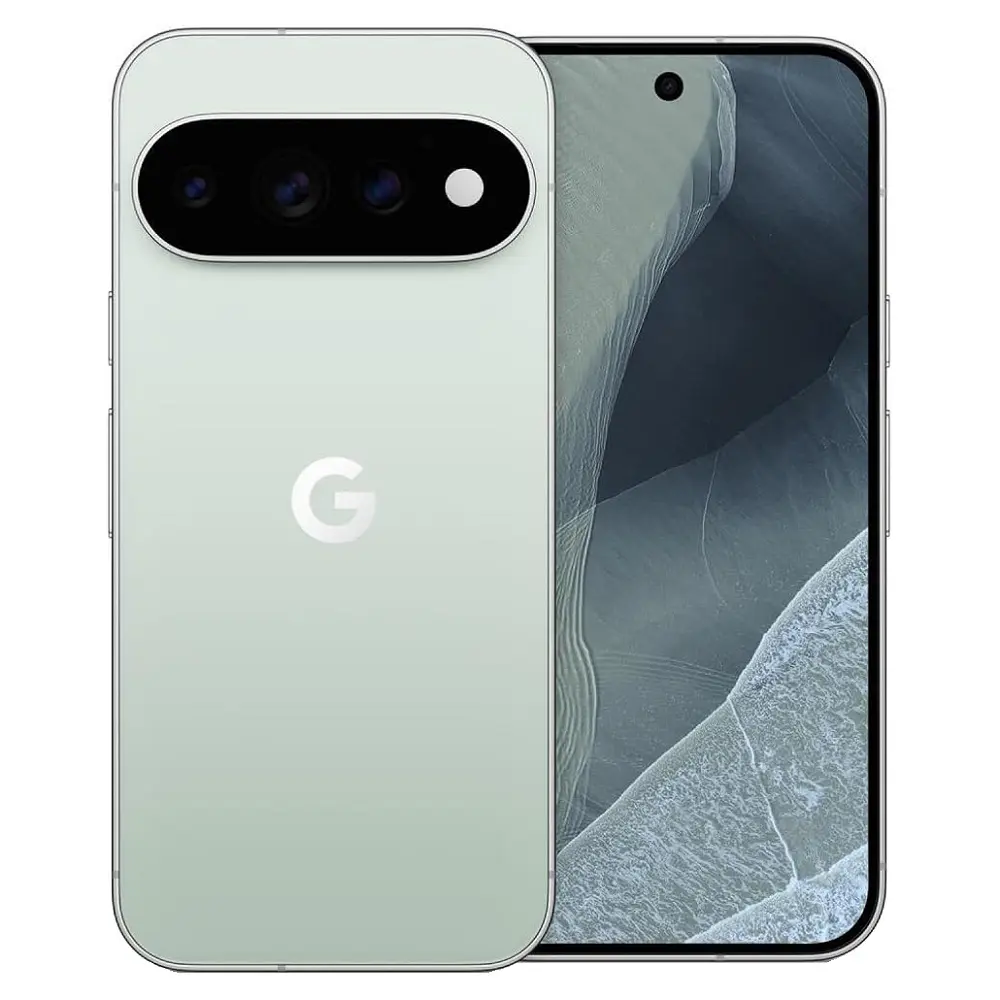
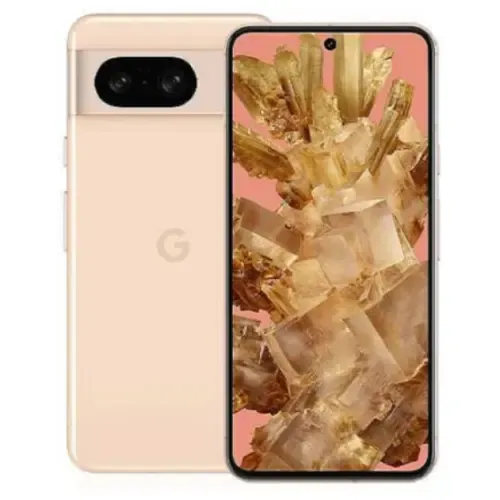
The Google Pixel 8 carries a compact, premium feel at 150.5 x 70.8 x 8.9 mm and 187 grams. Gorilla Glass Victus shields both the front and back, held together by an aluminum frame that gives it a solid, reassuring grip. The IP68 rating means it survives dust and immersion in up to 1.5 meters of water for 30 minutes, so everyday spills and rain are non-issues. Up front, the 6.2-inch OLED panel runs at 120Hz with HDR10+ support, delivering rich contrast and fluid scrolling. Brightness reaches 1400 nits in high brightness mode and peaks at 2000 nits, making outdoor visibility excellent even under direct sunlight. Stereo speakers handle the audio side, and while there's no 3.5mm headphone jack, the sound output is rated as very good at -26.0 LUFS, so media consumption feels immersive whether you're streaming video or listening to music.
Under the hood, the phone runs on the Google Tensor G3 chipset built on a 4nm process, paired with a nona-core CPU and Immortalis-G715s MC10 GPU. Performance benchmarks tell a solid story—AnTuTu scores around 926,801 on v9 and over 1.15 million on v10, while GeekBench reaches 3526 on v5 and 4404 on v6. In daily use, that translates to smooth app switching, responsive navigation, and capable gaming, with GFXBench hitting 73fps on the ES 3.1 onscreen test. You get 8GB of RAM with either 128GB or 256GB of UFS 3.1 storage, though there's no microSD slot for expansion. The phone ships with Android 14 and supports up to 7 major Android upgrades, eventually reaching Android 16. That kind of software longevity is rare and makes the Google Pixel 8 a smart pick for anyone who keeps their phone for years.
Camera & Battery
The rear camera setup pairs a 50MP main sensor with a 12MP ultrawide, both featuring autofocus. The main shooter uses a 1/1.31" sensor with 1.2µm pixels, optical image stabilization, and dual pixel PDAF for fast, accurate focusing. Laser AF adds another layer of precision. Features like Pixel Shift, Ultra HDR, and Best Take give you tools to capture detailed, well-balanced shots in challenging lighting conditions. Video recording is equally capable, supporting 4K at 24, 30, or 60fps with both gyro-EIS and OIS for steady footage, plus 10-bit HDR for rich color grading. You also get 1080p slow-motion options up to 240fps. On the front, the 10.5MP ultrawide selfie camera shoots 4K video at up to 60fps and includes HDR and panorama modes. The selfie sensor measures 1/3.1" with 1.22µm pixels, handling group shots and everyday self-portraits without fuss.
Powering the Google Pixel 8 is a 4575 mAh lithium-ion battery that holds up well through a full day of mixed use. The active use score comes in at 11 hours and 17 minutes, and the endurance rating sits at 83 hours, which should comfortably cover typical daily routines including browsing, streaming, and photography. When it's time to recharge, 27W wired charging with PD3.0 and PPS support gets you to 50% in about 30 minutes. Wireless charging is available at 18W, and reverse wireless charging lets you top up accessories on the go. A useful bypass charging feature is also included, which helps reduce heat during heavy use while plugged in. Connectivity is comprehensive, with Wi-Fi 7 support, Bluetooth 5.3 with aptX HD, NFC, and USB Type-C 3.2. The under-display optical fingerprint sensor works alongside the usual accelerometer, gyro, proximity, compass, and barometer sensors.
Who Should Buy This
The Google Pixel 8 is ideal for users who prioritize camera quality, clean software, and long-term update support in a compact form factor. If you want a phone that takes consistently great photos without manual tweaking, this fits the bill perfectly. The seven major Android upgrades make it especially appealing for anyone who plans to hold onto their device for several years without feeling left behind. Photography enthusiasts, casual gamers, and everyday users who value a smooth, bloat-free Android experience will feel right at home. However, if you need expandable storage, a headphone jack, or extremely fast wired charging speeds, you may want to look elsewhere. The 27W charging is adequate but not class-leading, and the absence of a microSD slot means you should choose your storage tier carefully at purchase.
Pros
- OLED display with 120Hz and 2000 nits peak brightness
- Seven major Android upgrades starting from Android 14
- IP68 water and dust resistance for everyday durability
- 4K video recording with OIS on both cameras
- Compact 187g body with premium Gorilla Glass Victus
Cons
- No microSD card slot for storage expansion
- 27W wired charging is relatively modest
- No 3.5mm headphone jack included
- Only 8GB RAM with no higher configuration available
Verdict
The Google Pixel 8 delivers a well-rounded experience in a compact, durable package. Its standout strengths are the OLED display with excellent brightness, capable dual-camera system with versatile video options, and an exceptional seven-year software update commitment. The Tensor G3 chipset handles daily tasks and gaming competently, though benchmark numbers show it's not chasing raw performance records. Battery life is reliable, and the inclusion of wireless and reverse charging adds convenience. The main trade-offs are the lack of expandable storage, no headphone jack, and modest wired charging speeds. For anyone who values photography, clean software, and long-term support in a manageable size, this phone is a strong choice.
Write a Review
Upgrade Worth It?
Using an older phone?
Compare your current device with Google Pixel 8 to analyze performance gains and price difference.
Camera Samples
Performance & Features
Estimated average on high settings
Screen-on time (mixed usage)
Based on AI analysis
* These values are calculated automatically by our system and may not be 100% accurate.
Antutu Benchmark
v10* Scores are based on lab tests and may vary by device condition and version.