Available Variants
Full Specifications
Upgrade Worth It?Network
| Technology | No cellular connectivity |
| 2G bands | N/A |
| 3G bands | N/A |
| GPRS | N/A |
| EDGE | N/A |
Launch
| Announced | 2024, May 23 |
| Status | Available. Released 2024, May 23 |
Body
| Weight | 571 g (1.26 lb) |
| Build | Glass front (Gorilla Glass 3), aluminum frame, aluminum back |
| SIM | No |
| Stylus support | magnetic |
| Dimensions | 280 x 181.9 x 7.5 mm (11.02 x 7.16 x 0.30 in) |
Display
| Type | IPS LCD, 68B colors, 120Hz, Dolby Vision, 600 nits (HBM) |
| Protection | Corning Gorilla Glass 3 |
| Resolution | 1600 x 2560 pixels, 16:10 ratio (~249 ppi density) |
| Size | 12.1 inches, 424.5 cm2 (~83.4% screen-to-body ratio) |
Hardware & Software
| OS | Android 14, HyperOS |
| Chipset | Qualcomm SM7435-AB Snapdragon 7s Gen 2 (4 nm) |
| CPU | Octa-core (4x2.40 GHz Cortex-A78 & 4x1.95 GHz Cortex-A55) |
| GPU | Adreno 710 |
Memory & Storage
| Card slot | microSDXC (dedicated slot) |
| Storage Type | UFS 2.2 |
| Internal | 256GB 8GB RAM |
Main Camera
| Single | 8 MP, f/2.0, (wide), 1/4.0", 1.12µm |
| Video | 1080p@30fps |
| Features | LED flash |
Selfie Camera
| Single | 8 MP, f/2.3, (wide), 1/4.0", 1.12µm |
| Video | 1080p@30fps |
Sound
| Loudspeaker | Yes, with stereo speakers (4 speakers) |
| 3.5mm jack | Yes |
Connectivity
| WLAN | Wi-Fi 802.11 a/b/g/n/ac/6, dual-band, Wi-Fi Direct |
| USB | USB Type-C 2.0 |
| Radio | No |
| NFC | No |
| Positioning | No |
| Bluetooth | 5.2, A2DP, LE, aptX HD, aptX Adaptive |
Features
| Sensors | Accelerometer, gyro, proximity (accessories only), compass |
Battery
| Charging | 33W wired, PD3.0, QC3+ |
| Type | 10000 mAh |
Tests
| Performance | AnTuTu: 600399 (v10) GeekBench: 2909 (v6) 3DMark: 793 (Wild Life Extreme) |
| Display | 1356:1 contrast ratio, 564 nits max brightness (measured) |
| Loudspeaker | -23.9 LUFS (Very good) |
| Battery | Active use score 9:15h |
Community Discussions
(0)No Discussions Yet
Be the first to ask a question, share a review, or give advice about the Xiaomi Poco Pad.
Start a DiscussionFrequently Asked Questions
Description
Overview & Display
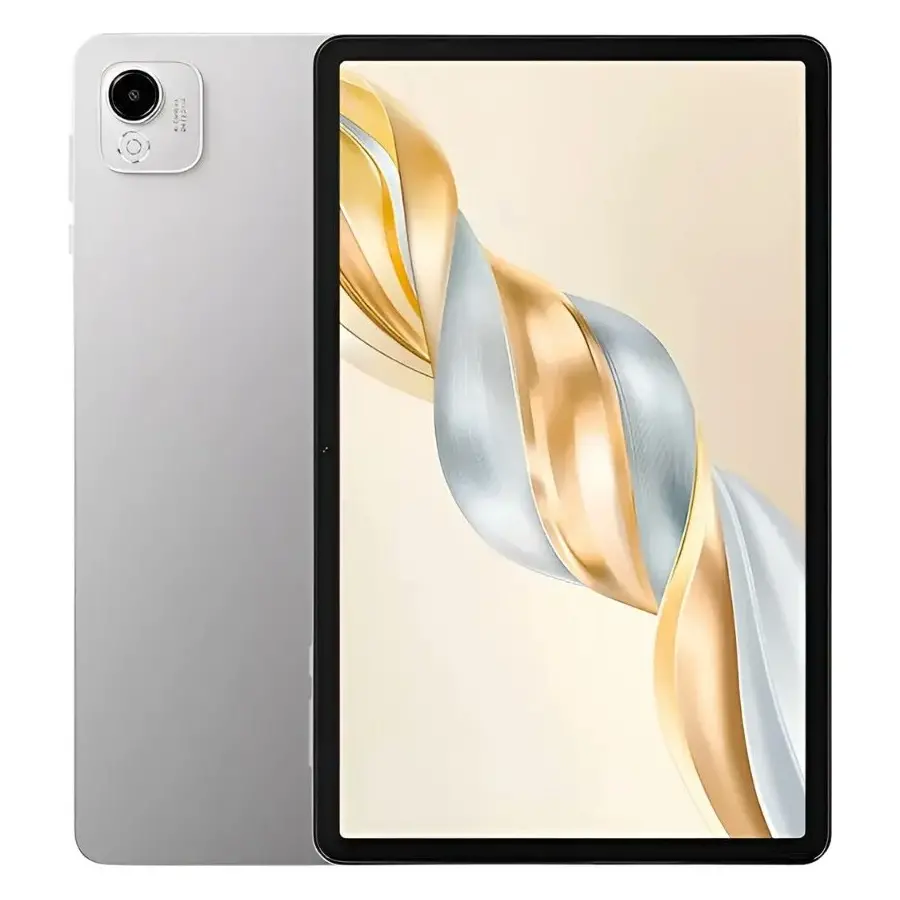
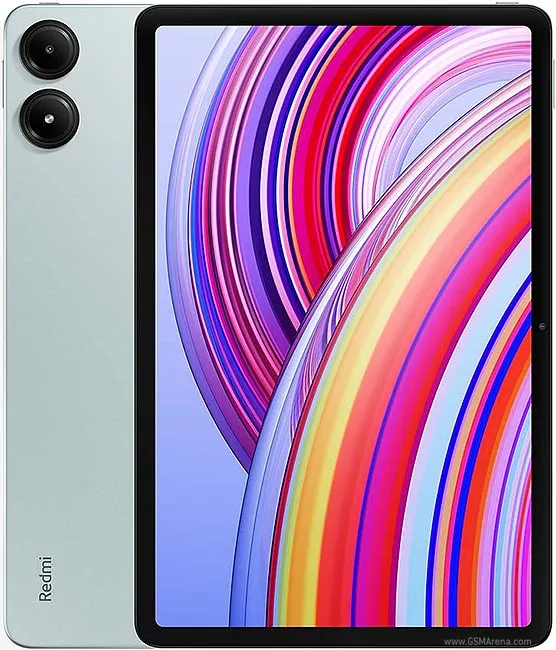
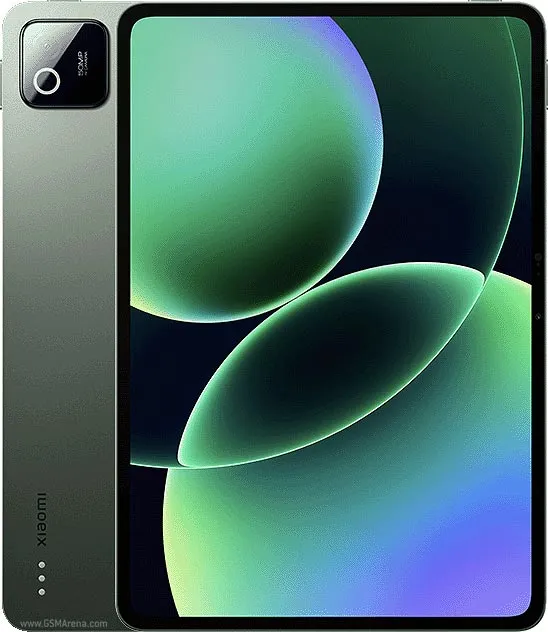
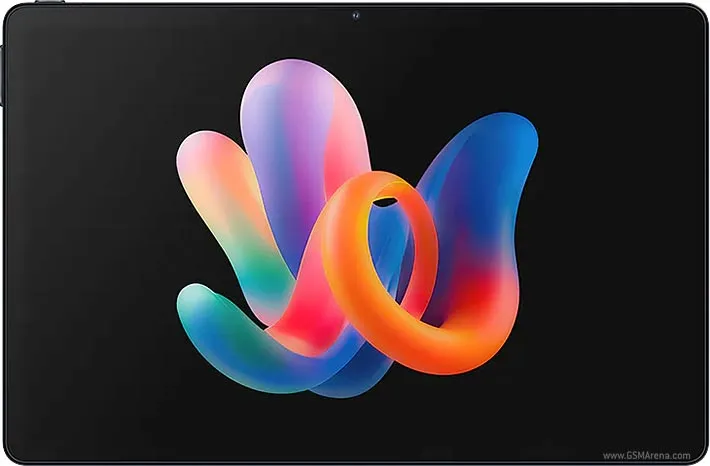
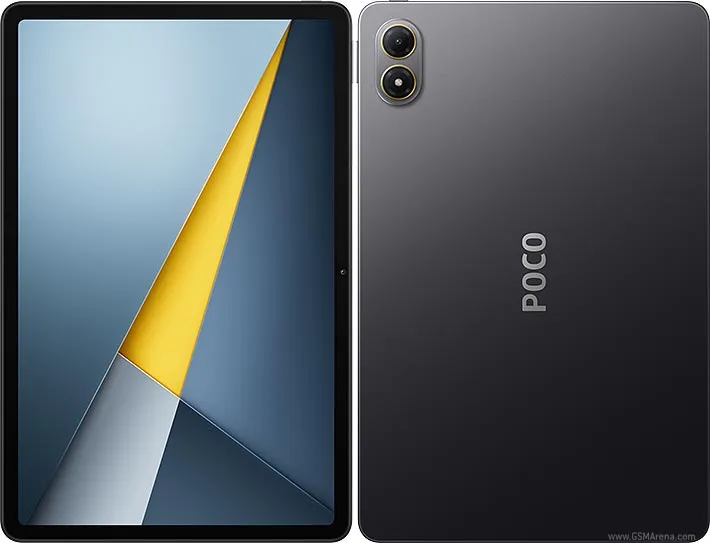
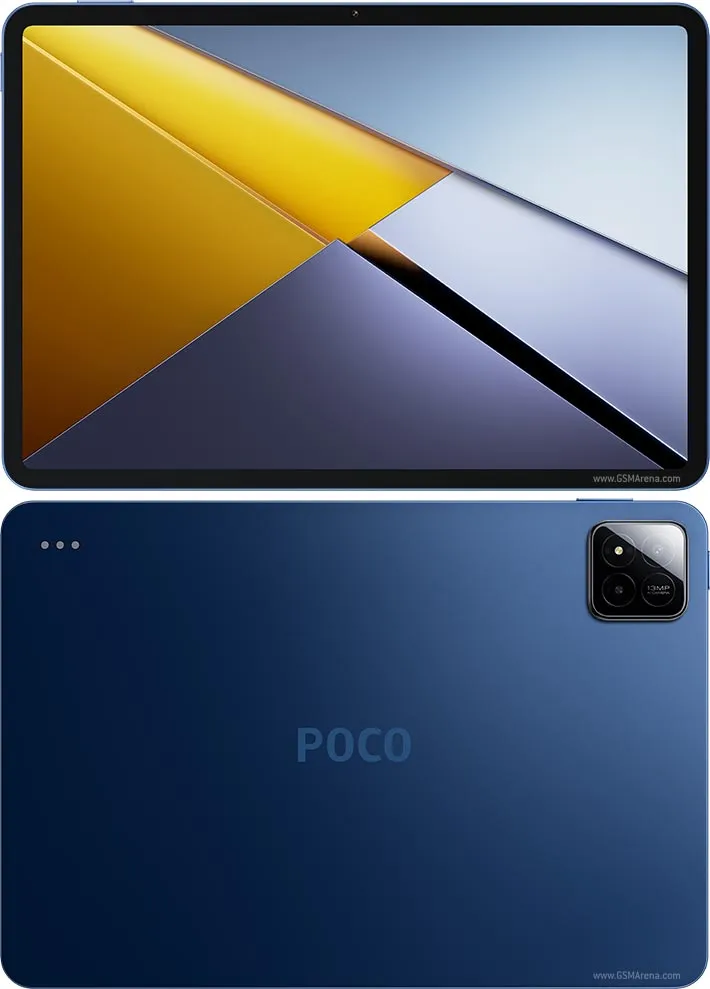
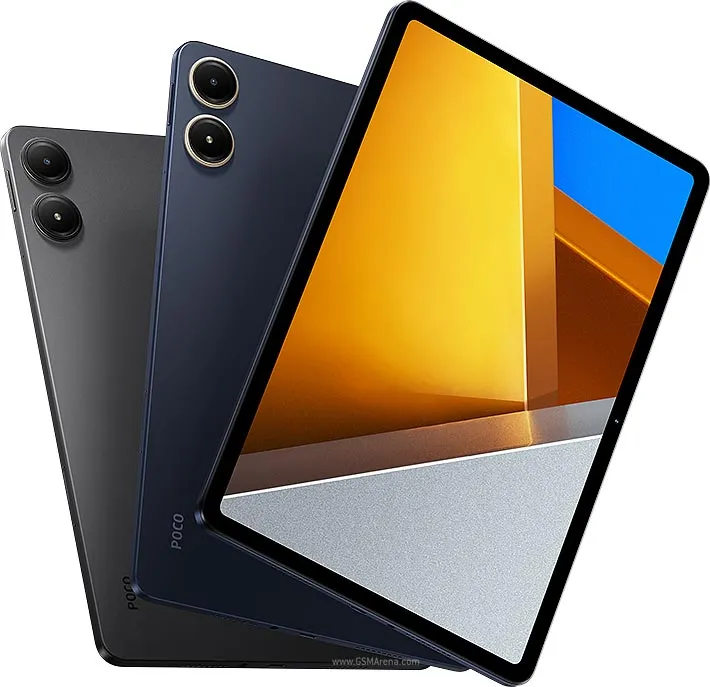
The Xiaomi Poco Pad presents a substantial and well-built device, immediately noticeable due to its weight of 571 grams. Its construction utilizes a glass front protected by Gorilla Glass 3, encased within a sturdy aluminum frame and back. The expansive 12.1-inch IPS LCD display offers a vibrant viewing experience with 68 billion colors and a smooth 120Hz refresh rate, further enhanced by Dolby Vision support. At 600 nits brightness, the screen should remain usable in most indoor lighting conditions, and the 16:10 aspect ratio provides ample space for multimedia consumption. The screen-to-body ratio of 83.4% indicates a focus on maximizing the display area.
Under the hood, the Poco Pad is powered by a Qualcomm SM7435-AB Snapdragon 7s Gen 2 chipset, paired with 8GB of RAM and 256GB of UFS 2.2 storage. This configuration, coupled with the Octa-core processor, suggests a capable performer for daily tasks and moderate gaming. It runs on Android 14 with the HyperOS interface. The dedicated microSDXC card slot provides expandability for storage needs. Performance benchmarks, including AnTuTu scores of over 600,000, indicate a responsive experience for general multitasking and running applications.
Camera & Battery
The Xiaomi Poco Pad features an 8MP rear camera with an f/2.0 aperture and LED flash, capable of recording 1080p video at 30fps. While not a primary focus, the camera should be sufficient for casual snapshots and video calls. The front-facing 8MP camera, also with an f/2.0 aperture and 1080p video recording, is similarly suited for video conferencing and selfies. Given the specifications, expect reasonable image quality in well-lit environments.
Battery life is a strong point of the Poco Pad, boasting a large 10000 mAh battery. Active use scores of 9 hours and 15 minutes suggest it can easily handle a full day of use, even with demanding applications. Supporting 33W wired charging with PD3.0 and QC3+ compatibility allows for relatively quick replenishment. The inclusion of stereo speakers with four drivers and a 3.5mm headphone jack further enhances the multimedia experience, ensuring both immersive audio and convenient connectivity options.
Who Should Buy This
The Xiaomi Poco Pad is ideally suited for users seeking a large-screen tablet primarily for entertainment and productivity on the go. Its expansive display, coupled with a powerful processor, makes it well-suited for video streaming, reading, and light content creation. Individuals who appreciate a robust build quality and extensive battery life will find this device appealing. However, those requiring cellular connectivity or a more advanced camera system may want to consider alternative options. This tablet caters to users who prioritize a large, capable, and long-lasting device for home or travel use.
Pros
- Large 12.1-inch IPS LCD display
- Powerful Snapdragon 7s Gen 2 processor
- Extensive 10000 mAh battery
- Stereo speakers with four drivers
- Dedicated microSDXC card slot
Cons
- No cellular connectivity
- Limited camera capabilities
- Relatively heavy at 571g
- Lacks NFC for contactless payments
- No positioning capabilities
Verdict
Overall, the Xiaomi Poco Pad delivers a compelling tablet experience. Its expansive display, capable performance, and impressive battery life make it a strong contender in its class. While the lack of cellular connectivity and a more sophisticated camera system are notable limitations, the device excels as a portable entertainment and productivity hub. The robust build quality and generous storage further enhance its appeal. For those seeking a large-screen tablet focused on media consumption and general use, the Poco Pad is a worthwhile consideration.
Write a Review
Upgrade Worth It?
Using an older phone?
Compare your current device with Xiaomi Poco Pad to analyze performance gains and price difference.
Camera Samples
Performance & Features
Estimated average on high settings
Screen-on time (mixed usage)
Based on AI analysis
* These values are calculated automatically by our system and may not be 100% accurate.
Antutu Benchmark
v10* Scores are based on lab tests and may vary by device condition and version.